
Introduction:
Planning to Study Abroad?
Studying abroad is a dream for many students, but turning that dream into reality requires more than just good grades and a strong university application.
One of the biggest factors that determines success is financial planning for study abroad. Without proper planning, students often face stress related to tuition payments, visa approvals, accommodation costs, and unexpected expenses. A well-structured financial plan helps students manage expenses confidently while focusing on their academic and career goals.
International education costs for Indian students can range from ₹15 lakhs to ₹50 lakhs or more, depending on the country, course, and university. Countries like the UK, Canada, Australia, and the USA also require students to show proof of sufficient funds before approving student visas. This makes early financial preparation extremely important.
Understand the Total Cost of Studying Abroad
The first step in financial planning is understanding the complete cost of education abroad. Many students focus only on tuition fees and ignore other major expenses. A proper study abroad budget should include:
- Tuition fees
- Accommodation expenses
- Food and transportation
- Visa and application fees
- Health insurance
- Flight tickets
- Currency conversion charges
- Emergency funds
For example, the UK requires students to show proof of tuition fees along with approximately £1,023–£1,334 per month for living expenses. Canada currently requires around CAD 20,635 annually for living costs. Understanding these financial benchmarks early helps students make realistic decisions.
Students should also compare cities before selecting universities. Living in major cities like London, Toronto, or New York is far more expensive than studying in smaller towns. Careful research can help reduce overall costs significantly.
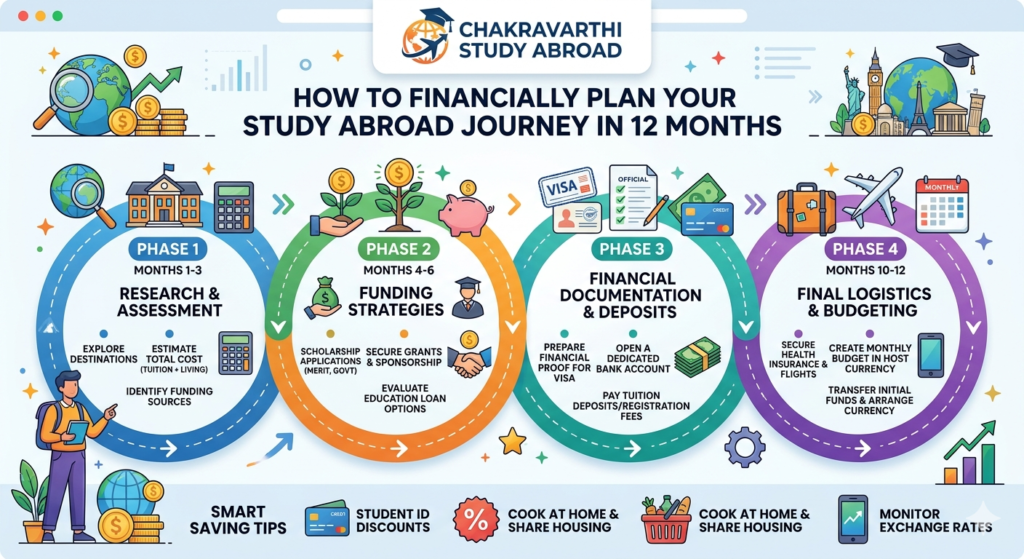
Create a 12-Month Financial Timeline
A structured timeline makes financial planning easier and less stressful. Ideally, students should begin preparing at least 12 months before departure.
12 Months Before Departure
Start by estimating the total budget for studying abroad. Research tuition fees, accommodation costs, and average living expenses for your preferred destination. At this stage, students should also discuss funding options with family members.
Ask questions such as:
- How much can family savings contribute?
- Will an education loan be required?
- Are scholarships available?
Creating a realistic financial roadmap early helps avoid future disappointments.
9–10 Months Before Departure
This stage is ideal for shortlisting universities based on affordability. Many students choose universities only based on rankings and later realize the costs are too high. Selecting financially practical options is important for long-term stability.
Students should also begin applying for scholarships during this phase. Scholarship opportunities are highly competitive, and early applications usually have better success rates.
Apply for Scholarships and Financial Aid
Scholarships can significantly reduce the financial burden of overseas education. Although fully funded scholarships are limited, partial scholarships still help lower tuition fees and living expenses.
Scholarships are generally awarded based on:
- Academic performance
- Leadership skills
- Sports achievements
- Research potential
- Community involvement
Popular scholarships for Indian students include:
| Scholarship | Destination |
| Chevening Scholarship | UK |
| Fulbright-Nehru Fellowship | USA |
| Australia Awards | Australia |
| Vanier Canada Scholarship | Canada |
Students should prepare strong Statements of Purpose (SOPs), recommendation letters, and academic documents to improve scholarship chances.
Understand Education Loan Options
Education loans are one of the most common ways students finance overseas education. In India, education loans for international studies can range from ₹4 lakhs to ₹1.5 crore, depending on the university, course, and lender policies.
There are two major types of education loans:
| Loan Type | Description |
| Secured Loan | Requires collateral like property or fixed deposits |
| Unsecured Loan | Based on student profile and co-applicant income |
Before choosing a loan, students should compare:
- Interest rates
- Moratorium periods
- Repayment terms
- Processing fees
- Currency exchange risks
Starting the loan process early is essential because approvals often take time due to documentation and verification procedures.
Prepare Strong Financial Documents for Visa Approval
Student visa approval depends heavily on financial documentation. Immigration authorities need proof that students can afford tuition fees and living expenses throughout their course.
Commonly required documents include:
- Bank statements
- Income tax returns
- Salary slips
- Loan sanction letters
- Scholarship confirmation letters
One common mistake students make is depositing large amounts into bank accounts suddenly before visa submission. Unexplained transactions can create suspicion and lead to visa rejection. Maintaining transparent and stable financial records improves approval chances.
Plan Forex and Initial Expenses
As departure approaches, students should start planning currency exchange and initial settlement expenses. Exchange rate fluctuations can increase overall education costs if forex transactions are delayed.
Students should arrange funds for:
- Tuition deposits
- Accommodation security deposits
- Transportation
- Local SIM cards and internet
- Daily living expenses for the first few months
Using forex cards and international student banking services can help reduce transaction costs abroad.
Why Professional Guidance Helps
The study abroad process involves multiple financial decisions, and many students feel overwhelmed managing everything alone. Professional consultants can help students with:
- Budget planning
- University shortlisting
- Scholarship applications
- Education loan assistance
- Visa financial documentation
- Forex support
Chakravarthi Consultancy guides students through every stage of financial planning, helping them make informed and sustainable decisions for their overseas education journey.
Conclusion
Financial planning is one of the most important parts of studying abroad successfully. Proper budgeting, early loan applications, scholarship preparation, and organized financial documentation reduce stress and improve the overall experience. Students who start planning at least 12 months in advance gain better control over expenses and avoid last-minute complications.
Studying abroad is not just about getting admission into a university. It is about creating a financially sustainable journey that supports both academic success and future career growth. With the right financial strategy, students can confidently pursue their international education dreams.
Ready to turn your study abroad dream into a well-planned reality?
Don’t let financial confusion delay your future. From university shortlisting and scholarship guidance to education loans, forex support, and visa documentation, proper financial planning can make your overseas education journey smooth and stress-free.
Get expert support and personalized guidance from Chakravarthi Consultancy to confidently plan every stage of your international education journey.
👉 Visit: https://chakravarthi.sa.com
📞 Start your study abroad journey today with financial clarity and confidence.
FAQs
1. How much does studying abroad cost for Indian students?
The cost usually ranges between ₹15 lakhs and ₹50 lakhs, depending on the country and university.
2. When should financial planning for studying abroad begin?
Students should ideally start planning at least 12 months before departure.
3. Can scholarships fully cover study abroad expenses?
Some scholarships provide full funding, but most offer partial financial support.
4. What documents are needed for student visa financial proof?
Bank statements, income proof, loan sanction letters, and scholarship confirmations are commonly required.
5. Why is early education loan processing important?
Early loan processing prevents delays in tuition payments, visa appointments, and admission deadlines.